Edith Bruck was born in 1931 and is Hungarian but naturalized Italian. She is a multifaceted artist: she is a poet, writer, and filmmaker.
Well, but why mention her in this article, you must be thinking? Edith Bruck is also known as a direct witness to the Holocaust, being a survivor.
Her figure is very important because through her testimony she keeps the memory of the Shoah alive.
His books are invaluable because they allow us to stretch a thread that starts directly from the tragic events of Auschwitz and continues to the present day, destined to continue even beyond to deliver the voice and memory of those who were inside Auschwitz to future generations.
In this article we will discover together who Edith Bruck is, learn about her story and her testimony that comes through her works and words.
But before you read on, let me give you a piece of advice: to have a truly complete and enriching experience you will need two things that I think are essential: priority entrance, to avoid the long lines at the entrance, and the accompaniment of an experienced guide, so that you will have every piece of information related to what camp life was like and numerous testimonies from those who, like Edith Bruck, survived. Click here to learn more!

Ticket to Auschwitz-Birkenau (skip the line)
Purchase online. Choose the time of your choice. Visit the prisoner barracks, infamous gas chambers and crematoria on your own.
You can cancel for free up to the day before your visit.
Table of Contents
Who is Edith Bruck: the true story of the writer who survived Auschwitz

Photo by Unknown – Radiocorriere magazine, issue 41, year 1957, page 28, Public domain, Commons Wikimedia
Childhood
Edith Bruck was born in 1931 to a poor Jewish family in Hungary.
Her name was actually Edith Steinchreiber, but she kept her first husband’s name to avoid compulsory military service once she reached Israel after the war.
From an early age she realized that being a poor Jew in Europe was something complicated and she was the victim of discrimination.
Not surprisingly, in her book “Lived Verses,” she will write, “To be born by chance / to be born a woman / to be born poor / to be born a Jew / is too much / in one life.”
Forced to grow up in the ghetto, in the spring of 1944 she was deported first to Auschwitz, and later to other German camps including Dachau and lastly Bergen-Belsen where she was liberated in 1945.
On the day of her deportation to Auschwitz she was just 13 years old.
The deportation to Auschwitz

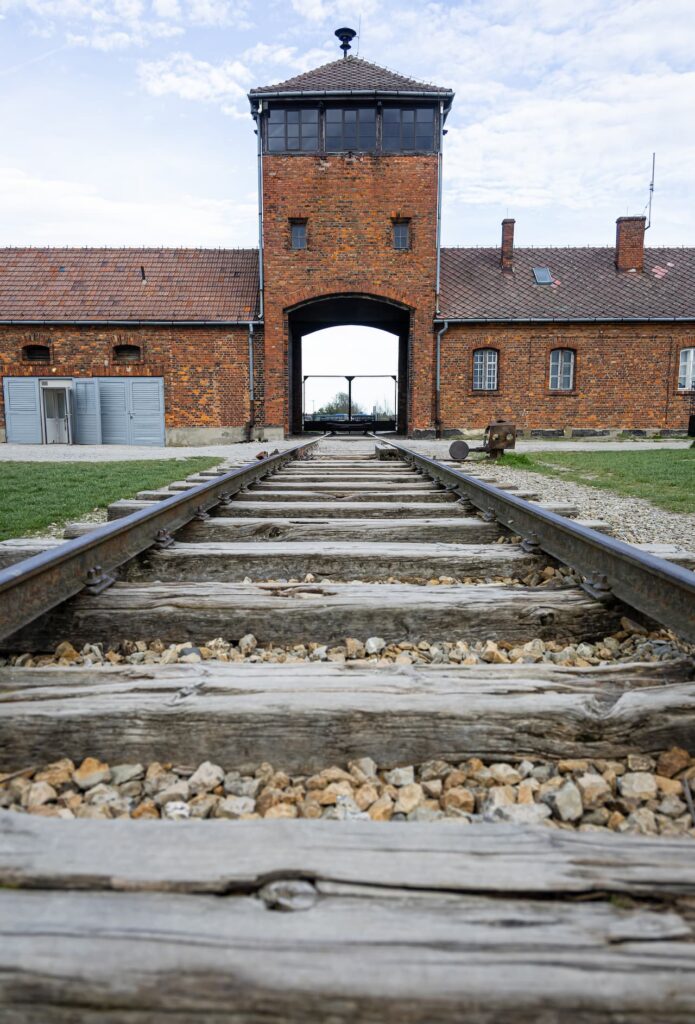
ID 313381457 | Auschwitz © Alexey Fedorenko | Dreamstime.com
Edith Bruck told about that tragic day when she arrived at Auschwitz. She recounted that she felt lost, desperate and very scared.
Already the journey was terrible enough to become a sad, indelible memory, but it was nothing compared to what would happen next.
Once they arrived, in fact, the children were separated from their parents. Edith recounted that she soon learned of the existence of the gas chambers and would therefore never see her parents again.
Only one sister was interned with her, but not for long given the subsequent deportations.
Inside Auschwitz even the children had to work, and the writer recounted that the only thought was to survive until the next day-there was nothing else to touch those people who had already died, even if they were still alive.
Edith recounted that she even happened to wake up with a dead girl beside her, in the cold bed, either from the temperatures, or from starvation, or from some illness, but that there was no time to mourn her: the first thought was to get away from the body and be on time for work.
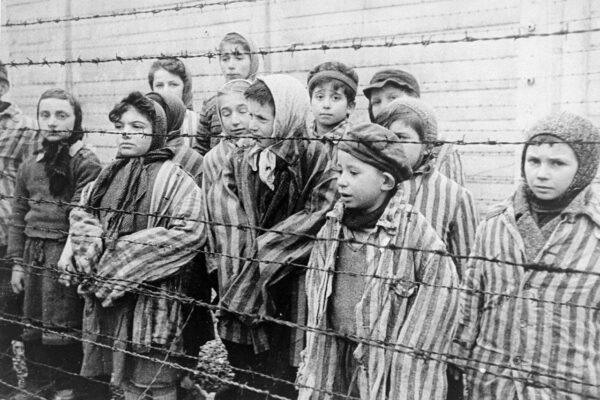
Ill-dressed from the cold, shaved… in fact, of the prisoners, Edith recounts, only a number remained, not even a name to identify them anymore.
The liberation
Edith Bruck was liberated in 1945 from the Bergen-Belsen camp.
Her first instinct was to return to the small village in Hungary with her sister: both wanted to tell their pain and story, but found no one willing to listen.
Even the writer recounted that they were driven out of their original village, for fear of complaints or that the two sisters would claim possessions now stolen or destroyed.
Then Edith thought she could move to the new state of Israel, and it was here that she married and took the surname Bruck to avoid military service.
The state of Israel, however, struggled to find peace, and the poet, unable to live with a reality of tensions and confrontations, decided to travel to Italy and settled in Rome, where she still lives today.
It is here that her artistic and literary journey begins: the author recounts that, not finding people to whom she could deliver her testimony, she decided to start writing in order to spit out that terrible pain and try, in some way, to exorcise it.
Initially, in fact, writing has a purely therapeutic role for the survivor.
In Rome, she married Nelo Risi, with whom she had earlier embarked on an artistic partnership, which would lead, among other things, to the transposition of one of her stories onto the big screen.
Also in Rome, Edith would collaborate with several newspapers before her literary debut.
The writer, in addition to receiving due attention for her themes, has also been able to make her works shine over the years for her artistry: in fact, she boasts several awards including the Viareggio Prize twice, the Premio Strega Giovani and the Premio Campiello for her career in 2023.
Telling the Shoah
Edith Bruck’s literary works are poignant and intimate accounts of an all too great pain that needs to be passed on as a warning.
The author has always been committed to this issue, both through her works and through her person, from newspaper articles to visits to schools.
Among her main books are “Who Loves You Like This” and “The Lost Bread,” but there are many titles such as, for example, the touching “Letters to Mother” or “Mrs. Auschwitz, the Gift of the Word.”
There is one constant in all of Edith’s works, although it may not emerge in the plots: writing as a means of processing trauma.
The writer told of a book she began in Hungary and only picked up in 1954 already in Italy, and the engine that drove her to take up the pen was precisely to “throw out.”
In an interview she said, “for me it was definitely a great help that I could somehow vent through writing, without thinking abouttestimonies, without thinking about any moral duty: it was important to write, it was almost a kind of therapy.”
Years later, however, he realized the role his writing could play and, even more, the testimony he could deliver to the world.
So it was that he began to go to schools and recount his experience, trying to pass it on to younger people.
It all began in 1959, after the release of her first book, “Who Loves You Like This,” but at first it was not easy, in fact, the author recounted that she cried and felt hurt recalling certain memories.
However, Edith always said she was very satisfied with her work because, although recalling the memory was always torture, she always received many letters from young boys grateful for the opportunity to listen to her.
In addition, she recounted that she met two young people who, impressed by her testimony, are now trying in turn to pass on this story school by school, a very important step, especially since in the future it cannot be done otherwise.
Edith’s books also aim to tell the story and keep the memory alive. Indeed, the themes addressed are the experience in the camps, the loss of family, survivor’s guilt towards those who did not make it, and many others related to the author’s dramatic experience.
Bruck also recounts what drove her to survive, some small and fleeting scenes she clung to in order to remind herself of the importance of existence and humanity.
One symbolic episode is when she arrived at Auschwitz, where a German soldier instructed her to go to the right row; she, frightened and not knowing which was the right, instinctively clung to her mother.
The soldier, ranting, hit both of them and forced young Edith into the right row. Only later did he understand that soldier did his best because the left row was the one headed for the gas chamber.
To these traces of humanity, however pale, the survivor clung, calling them “little lights,” but in her works and speeches she also wants to tell of all that cruel and terrifying darkness.
Another fact related to Edith Bruck’s testimony is her meeting in 2021 with Pope Francis. The pontiff, in fact, went to her home to send an important message and to listen to her story.
The writer recounted that she was very excited and spent very sweet words about that visit; she was so happy about it that she wrote a small book with the pope’s own preface, entitled “I am Francis.“

Ticket to Auschwitz-Birkenau (skip the line)
Purchase online. Choose the time of your choice. Visit the prisoner barracks, infamous gas chambers and crematoria on your own.
You can cancel for free up to the day before your visit.
Edith Bruck Auschwitz: Frequently Asked Questions
Edith Bruck is a writer and poet who survived the Holocaust, famous for her stories about life in the concentration camps. Once she arrived in Italy she began to write her testimony, initially to exorcise the pain. Later she understood the importance it could hold in keeping the memory of the Holocaust alive.
Edith Bruck was deported to Auschwitz with her family. A survivor of multiple camps, she recounted her experience in her books. On the day of deportation, Edith was only thirteen years old, and after a few days inside the camp she understood that she would never see her parents again. Even of all the sisters she had, only one survived the Nazi rampage. Edith, although so small, was equated with an adult: she therefore had to work all day in exchange for very little food. She lived in the cold in unhealthy barracks, was shaved and tattooed with a number that identified her.
Among Edith Bruck’s major works are “Who Loves You This Way “and “The Lost Bread,” winner of numerous literary awards. However, there are a great number of books that deal with the theme of the Holocaust. Consider, for example, “Letters to Mother,” “Mrs. Auschwitz. The Gift of the Word,” “The Woman in the Green Coat,” “We Will Go to Town,” and many others.
Edith Bruck is a symbol of historical memory and the fight against anti-Semitism, as well as an essential voice in telling the Holocaust to new generations. Even today, it is essential to continue to hear firsthand accounts of what happened and to continue to pass them on so that new generations can also be aware of the brutality that Auschwitz and the Holocaust more generally meant.
Auschwitz-Birkenau Survivor: Conclusion
We have thus come to the conclusion of our article in which we traced the story of Edith Bruck, a Holocaust survivor.
We recounted her biography, from her birth to her role as a witness and writer, through her tragic deportation to Auschwitz and her subsequent journey to Italy, where she settled.
Finally, I have answered the most frequently asked questions related to the figure of Edith Bruck, about her works and her witnessing of the Shoah; however, should you have any other curiosity or questions, please do not hesitate to write to us by leaving a comment below.
If you would like to know more stories of Auschwitz survivors, or historical information related to the camp, or even useful information for organizing a visit to the camp, I suggest you take a look at the other articles on our site: you will find all the answers you are looking for!
In conclusion, should you decide to visit Auschwitz, I would like to remind you of the importance of priority entrance to avoid the long lines present at the entrance. In addition, it is highly recommended to enlist the help of an experienced guide to experience a truly comprehensive and enriching visit, thus giving yourself an unparalleled opportunity for reflection.
Visiting Auschwitz is a gift, an opportunity that one gives oneself, but it should also be a duty: out of respect for Edith Bruck and the other survivors, out of respect for those who never made it out of the camps, out of respect for all humanity. It is a duty because, to quote the writer, “Indifference feeds racism, is its founding partner.”
Ticket to Auschwitz-Birkenau (skip the line)
Purchase online. Choose the time of your choice. Visit the prisoner barracks, infamous gas chambers and crematoria on your own.
You can cancel for free up to the day before your visit.