

The Auschwitz-Birkenau Memorial and Museum, located in the town of Oświęcim, Poland, is a place of remembrance and reflection. Through its authentic exhibits and testimonies, the site preserves the history of one of humanity’s darkest chapters, promoting awareness and remembrance of the victims of the Holocaust.
Everything you need to know before visiting the Auschwitz-Birkenau Memorial
In this guide you will find all the essential information you need to best plan your visit to Auschwitz-Birkenau. Find out how to purchase tickets, what are the best times to visit the site, and get practical advice on how best to enjoy this unique experience. We will help you prepare, ensuring an organized and respectful tour of this place of remembrance.
When to visit Auschwitz
The memorial is open to the public year-round, with hours varying with the seasons. To best appreciate the site, it is advisable to choose the least crowded time of day, which is the early morning hours.

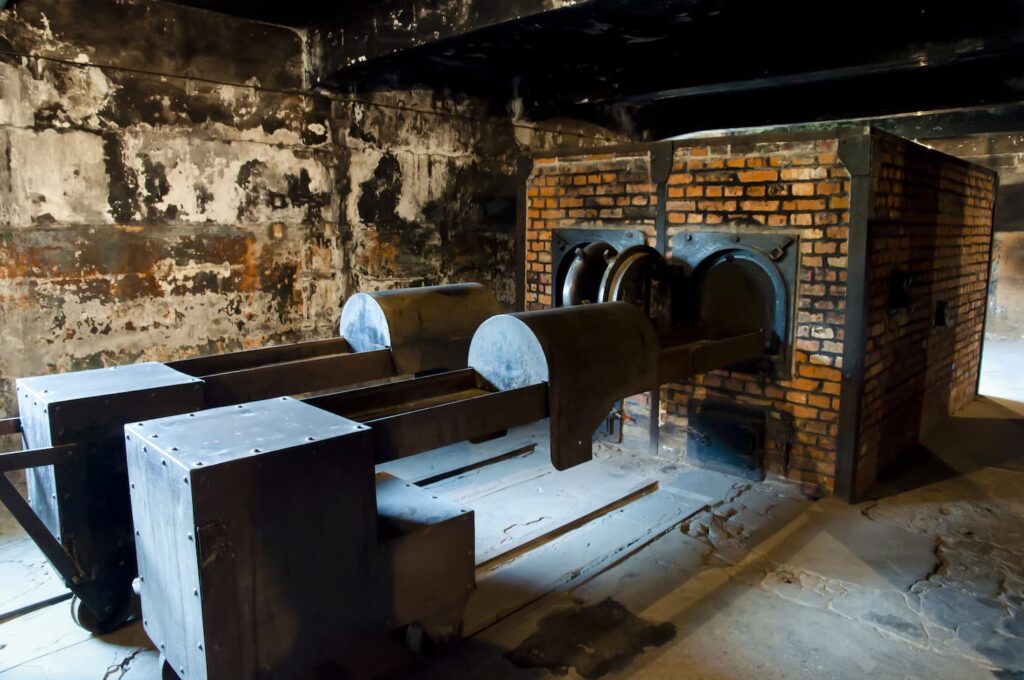
ID 5320767 | Auschwitz © Victoo | Dreamstime.com
Opening Hours
The Auschwitz-Birkenau death camp memorial follows different schedules throughout the year:
- January: from 8:00 a.m. to 3:00 p.m
- February: from 08:00 a.m. to 4:00 p.m
- March: 08:00 a.m. to 5:00 p.m
- April: 08:00 a.m. to 6:00 p.m
- May: 08:00 a.m. to 6:00 p.m
- June: 08:00 a.m. to 7:00 p.m
- July: 08:00 a.m. to 7:00 p.m
- August: 08:00 a.m. to 7:00 p.m
- September: 08:00 a.m. to 6:00 p.m
- October: 08:00 a.m. to 5:00 p.m
- November: 08:00 a.m. to 3:00 p.m
- December: 08:00 a.m. to 2:00 p.m
The times indicate the last allowed entry.
After closing time, visitors may remain at the site for up to 90 minutes beyond the final entry time.
Where it is located
Auschwitz
Auschwitz is located in the town of Oświęcim, Poland, about 70 km from Krakow and 36 km from Katowice. The memorial is located in an area of great historical importance, easily accessible by car, bus or train.

How to get to Auschwitz
The Auschwitz memorial is easily accessible from major nearby cities, such as Krakow and Katowice, thanks to a well-developed transportation network. Here are all the travel options, with details on travel times and arrival points.


Where to sleep near the Auschwitz memorial
If you plan to visit the Auschwitz-Birkenau death camp memorial, you can choose to stay in Oświęcim, near the entrance, for a more collected and reflective visit, or in Krakow, which offers a greater variety of accommodations and cultural attractions.
Where to eat near Auschwitz
What are the best restaurants near the Auschwitz camp? Find out more by clicking on the button below.

ID 26222552 | Auschwitz © Mino Surkala | Dreamstime.com
Auschwitz Tickets
To access the Auschwitz-Birkenau Memorial, online booking is always recommended. If you wish, you have the option of adding paid options such as guided tours or language audio guides for a more in-depth experience.
Skip-the-line admission tickets to Auschwitz-Birkenau
You can cancel for free up to the day before the visit.
What to know before you go to Auschwitz-Birkenau
Visiting Auschwitz-Birkenau is an emotionally and culturally impactful experience. To make your visit as organized and respectful as possible, it is important to keep in mind some practicalities and regulations specific to the memorial.
Reservation required
Admission to the Auschwitz-Birkenau Memorial is free, but online reservations are required for all visitors, including those who wish to enter without a guide. Available time slots fill up quickly, especially during peak season months, so booking well in advance is recommended. You can decide whether to visit Auschwitz on your own or opt for a guided tour with an experienced educator. The latter option is especially recommended for those who want to learn more about the history of the place through detailed explanations and historical contextualizations.
Opening Hours
The opening hours of the Auschwitz-Birkenau Memorial vary depending on the month of the year, adapting to the different seasons. In January and November, the site opens at 8:00 a.m. and last admission is allowed until 3:00 p.m. In February, hours are extended by one hour, with closing scheduled at 4:00 pm. During March and October, the memorial is accessible from 8:00 am to 5:00 pm. In the spring months of April and May, as well as in September, the site further extends its opening until 6:00 pm. Summer, which includes the months of June, July and August, sees the memorial open until 7:00 p.m., allowing visitors to take advantage of the long summer days. Finally, December features the shortest hours of the year, opening at 8:00 am and closing at 2:00 pm. It is important to note that the closing time indicates the time of last permitted entry, and visitors can remain inside until about 90 minutes later.
Accessibility
The memorial is partially accessible for people with disabilities. Wheelchairs are available at the entrance and can be used free of charge. Some interior areas, such as the historic blocks, may have restricted spaces or stairs that limit access. However, site staff are trained to assist visitors with special needs.
Recommended clothing
Auschwitz-Birkenau is a place of remembrance and reflection, so it is important to dress respectfully. It is advisable to avoid garish or overly informal clothing, opting for sober attire. Wear comfortable shoes, as the site covers a large area with sometimes uneven paths and barracks that require walking. In the winter months, temperatures can be extremely cold, so dress in layers and bring hats, gloves and scarves. In the summer months, protect yourself from the sun with hats and sunscreen, but always maintain appropriate clothing for the environment.
Backpacks and bags
For reasons of safety and convenience, only small backpacks or bags (maximum 30x20x10 cm) are allowed inside the site. A free checkroom service is available at the entrance to deposit larger bags, suitcases or other bulky items. We recommend that you travel light and carry only the bare essentials, such as documents, water bottles, and electronic audioguide devices.
Photographs
Photography is allowed in most areas of the memorial, but with some restrictions. Flash, tripods or other stabilization tools are not allowed in order to respect the place and not disturb other visitors. Also, in some particularly sensitive sections, such as blocks 4 and 11, photography is prohibited. These areas contain original objects and testimonies of strong emotional impact, and the restrictions serve to preserve the atmosphere of respect and reflection.
Duration of the visit
For a complete visit that includes both Auschwitz I (the main camp) and Auschwitz II-Birkenau, allow at least 3-4 hours. Each section takes about 1.5-2 hours to explore carefully. If possible, devote a full day to the site, especially if you plan to explore further with an experienced guide. This will allow you time to reflect on what you see and fully understand the history of the place.

What to see in Auschwitz
Birkenau
Every corner of Auschwitz-Birkenau tells stories of suffering, resilience and memory. From the names and faces of victims to the testimonies of the last survivors, the memorial preserves the voices of those who lived through those horrors.




Films and books about Auschwitz
Many authors and filmmakers have told the story of Auschwitz, making it accessible to future generations. Among the best known titles: Primo Levi’s If This is a Man, John Boyne’s The Boy in the Striped Pajamas, and Steven Spielberg’s film Schindler’s List.
Best films about Auschwitz
Among the best Holocaust films are Claude Lanzmann’s “Shoah,” released in 1985, relies on firsthand accounts and is a pillar of historical memory. “Saul’s Son” by László Nemes (2015) closely follows a deportee forced into gruesome work in the crematoria. alan J. Pakula’s “Sophie’s Choice” (1982) explores the guilt and trauma of a woman who experienced the camp. steven Spielberg’s “Schindler’s List” (1993) shows the constant shadow of Auschwitz against the backdrop of trying to save innocent lives. “The Passenger” by Andrzej Munk (1963) compares the memories of an SS overseer and a prisoner. wanda Jakubowska’s “The Last Stage” (1948), shot in the aftermath of the war, harks back to a harsh and tangible realism. tim Blake Nelson’s “The Grey Zone” (2001) narrates the drama of the Sonderkommando, making any viewer neutrality impossible.
Best books on Auschwitz
Primo Levi’s “If This is a Man” offers a raw but deeply human account of life in the camp. “The Truce”, also by Levi, describes the difficult return to normalcy after liberation, amid uncertainties and hopes. “The Auschwitz Doctor” by Miklós Nyiszli reveals the horrors of Mengele’s experiments through the eyes of a Hungarian prisoner doctor. “The Night” by Elie Wiesel tells the story of a young deportee and the loss of his faith. “The Drowned and the Saved” by Levi reflects on moral ambiguity and collective responsibility. “Memory sets one free” by Liliana Segre is the journey of a survivor who chose to bear witness. “Auschwitz. A Brief History” by Otto Dov Kulka offers an essential historical framework for understanding the context of the extermination.

ID 23465274 | Auschwitz © Ewa Mazur | Dreamstime.com
Frequently asked questions
Do you have questions about the Auschwitz-Birkenau death camp? Check out our FAQ section to find detailed answers to common questions.
To visit Auschwitz, it is necessary to book tickets well in advance through the official website or through authorized agencies. Admission is free, but it is strongly recommended to add paid options, such as an expert guide or audio guide. Remember that reservations are also required for self-guided tours. For more information, visit the page on tickets to Auschwitz.
The best way to visit Auschwitz is with an official guide. Guides offer detailed explanations of the history of the camp, its facilities and historical context. However, it is possible to visit the site independently, taking advantage of audio guides or maps provided at the entrance. To maximize time and understanding, organized guided tours are an excellent option.
Auschwitz is a place of memory and reflection, so sober and respectful attire is recommended. Avoid bright colors or inappropriate clothing. Wear comfortable shoes, as the route covers large areas with sometimes uneven terrain. In the winter months, be sure to dress appropriately to cope with the low temperatures.
No, admission is allowed only with online reservation. For guided tours, it is essential to reserve your place well in advance, especially during peak season. Self-access also requires reservations, available on the official website.
Visiting Auschwitz is a deeply moving and intense experience. The silence and atmosphere of the place evoke a sense of respect and reflection, while the remains of the camps and the personal belongings of the deportees convey the enormity of the tragedy experienced. Many visitors report feeling sadness, empathy and a sense of helplessness in the face of so much suffering. However, it is also an opportunity to honor the memory of the victims and reflect on the importance of not forgetting. It is an experience that leaves an indelible mark on the historical and human awareness of anyone who goes there.